
Where we explore the beautiful, messy, and meaningful journey of caring for yourself - through movement, celebration, and moments.
Nurture Studios
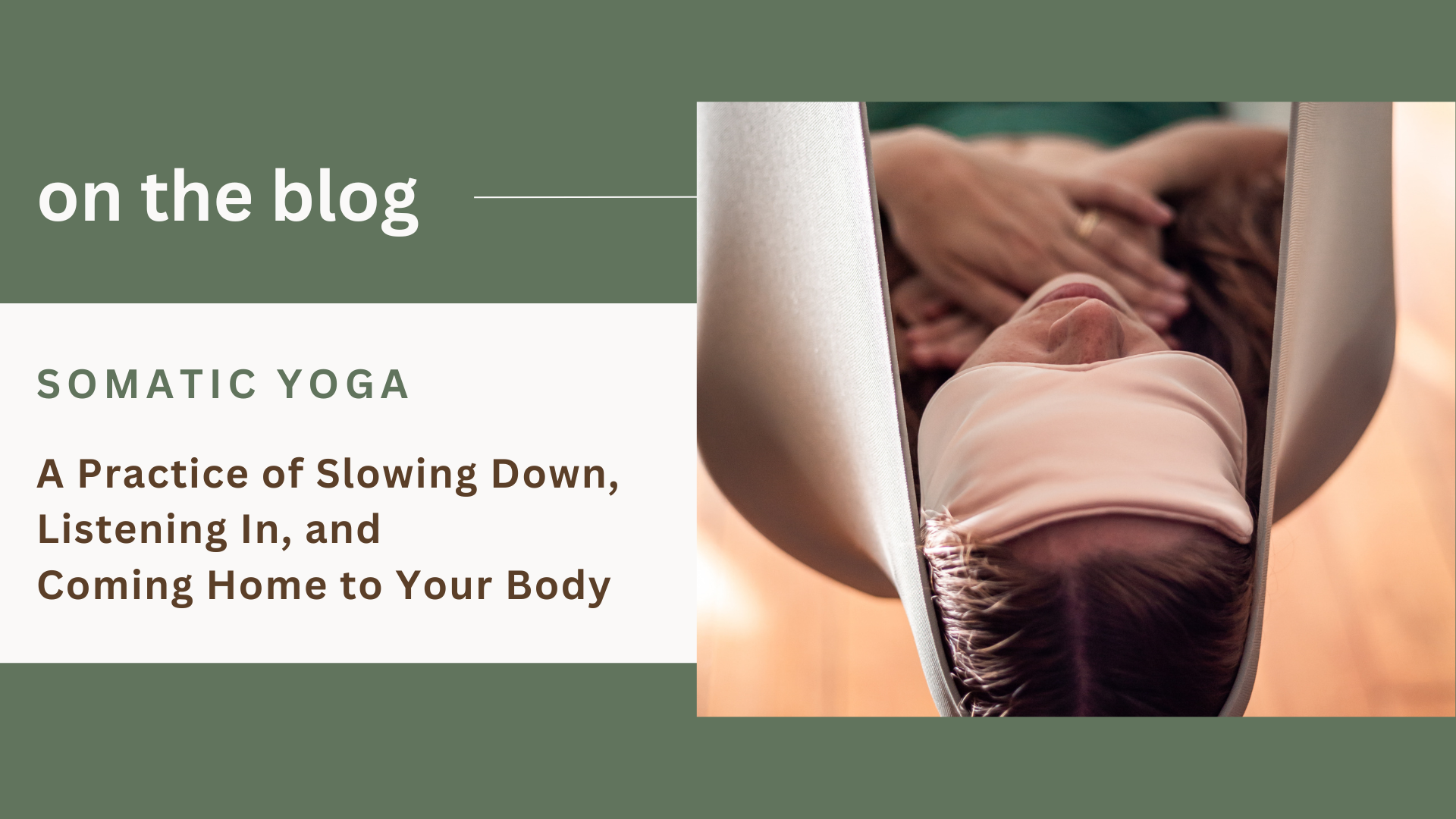
Somatic Yoga: A Practice of Slowing Down, Listening In, and Coming Home to Your Body
Life moves quickly.
Between work, family, responsibilities, notifications, and the never-ending list of things that need our attention, it is easy to spend our days moving from one thing to the next without ever truly checking in with ourselves.
We often ask our bodies to keep going, keep performing, keep showing up — but how often do we pause and ask:
“How am I actually feeling?”
“What does my body need today?”
“Can I slow down enough to listen?”
This is where somatic yoga comes in.
Somatic yoga is an invitation to reconnect with yourself through gentle, mindful movement. It is a practice of slowing down, creating awareness, and building a deeper relationship with the body you live in every day.
At Nurture Studios, we believe movement is not about perfection. It is not about forcing yourself into a certain shape or comparing your practice to someone else’s. Movement is a way to care for yourself, to create space, and to come back home to your body.
What Is Somatic Yoga?
The word somatic comes from the Greek word soma, meaning “the living body.”
Unlike practices that focus primarily on how a pose looks from the outside, somatic yoga focuses on what you experience from within.
It is less about achieving a pose and more about noticing.
Instead of asking:
“Am I doing this correctly?”
Somatic yoga invites you to ask:
“What sensations am I noticing?”
“Where am I holding tension?”
“What feels supportive and nourishing for my body today?”
Through slow, intentional movements, breath awareness, and mindful exploration, somatic yoga helps you reconnect with your body’s natural wisdom.
What Does Somatic Yoga Look Like?
A somatic yoga class may feel different from a traditional flow class. There is often more space, more time, and more permission to move at your own pace.
You may experience:
Slow and Intentional Movement
Movements are often small, gentle, and exploratory. You may move in and out of shapes slowly, allowing your brain and body time to communicate.
Sometimes the smallest movements create the biggest moments of awareness.
Breathwork and Awareness
Your breath becomes a guide throughout the practice. You may explore how your breathing patterns affect your body, your energy, and your ability to settle into the present moment.
Gentle Mobility and Release
Somatic yoga can help you notice areas where you hold stress or tension. Through mindful movement, you create opportunities for your body to soften, release, and find more ease.
Moments of Stillness
A powerful part of somatic practice is learning to pause.
Rather than immediately moving to the next thing, you create space to notice what is happening right now.
Why Try Somatic Yoga?
A Chance to Slow Down
Many of us are constantly doing. Somatic yoga offers a moment to simply be.
It is a practice where you do not have to accomplish anything. You do not have to be flexible, strong, or experienced. You simply get to arrive as you are.
Support for Your Nervous System
Stress shows up in our bodies. Tight shoulders, a clenched jaw, shallow breathing, restless energy, and feeling constantly “on” are all ways our bodies communicate with us.
Somatic movement helps create moments of safety, awareness, and calm by encouraging us to slow down and reconnect.
A Deeper Connection With Yourself
Your body is always giving you information.
Somatic yoga helps you notice those messages — when you need rest, when you need movement, when you are carrying tension, and when you need a little more kindness toward yourself.
A Practice Rooted in Self-Compassion
At Nurture Studios, we believe your body is not something to fix.
Your body is something to appreciate, care for, and listen to.
Somatic yoga reminds us that we can move from a place of curiosity instead of criticism and compassion instead of judgment.
Who Is Somatic Yoga For?
Somatic yoga is for every body.
It is a beautiful practice for those who:
Feel stressed or overwhelmed
Want a slower, more mindful approach to movement
Carry tension in their body
Are new to yoga
Are returning to movement after time away
Want to build a stronger mind-body connection
Need a space to pause and reconnect
You do not need to be flexible.
You do not need previous yoga experience.
You do not need to know exactly what your body needs before you arrive.
That is part of the practice — learning to listen.
Join Us for a Somatic Yoga Workshop This Fall
This fall, we invite you to slow down, reconnect, and experience the benefits of somatic movement in a supportive and welcoming space at Nurture Studios.
Our Somatic Yoga Workshop will guide you through mindful movement, breath awareness, and gentle practices designed to help you release tension, reconnect with your body, and create more space for calm and ease.
Whether you are brand new to yoga or have been practicing for years, this workshop is an opportunity to step away from the busyness of everyday life and give yourself the gift of presence.
Come exactly as you are. No flexibility required. No experience needed. Just bring your breath, your curiosity, and a willingness to listen inward.
Reserve your spot for our Somatic Yoga Workshop this fall HERE.
We cannot wait to slow down, breathe, and practice with you at Nurture Studios.

Your Body Is Not Your Project: A Gentle Path to Body Liberation
Take a breath. Let your shoulders drop. Notice how your body is holding you right now—not how it should be, not how it could be, but exactly as it is in this moment.
What if you didn't have to earn your worth through your body?
In a world that profits from our dissatisfaction, body liberation feels like a radical act. But here's what I want you to know: your body is not a before photo waiting for an after. It's not a problem to be solved or a project to be perfected. Your body is your home and it's been carrying you through this life with more grace than you probably give it credit for.
Body liberation isn't about loving every inch of yourself every day (though if you do, that's beautiful too). It's about freeing yourself from the exhausting work of constantly measuring your worth against impossible standards. It's about coming home to yourself, exactly as you are, right now - not as a place to stay forever, but as a foundation from which to grow.
The difference between body positivity and body liberation
Body positivity asks us to love our bodies. Body liberation asks us something different: what if your relationship with your body could be grounded in partnership rather than judgment? What if your body could be your ally in creating the life you want?
While body positivity encourages us to find our bodies beautiful, body liberation invites us to start from a place of acceptance and from that grounded place, anything becomes possible. It's the difference between trying to convince yourself you look good in the mirror and walking past the mirror with quiet confidence in who you are.
This doesn't mean we can't appreciate our bodies or feel beautiful - it means our sense of self becomes stable enough to support real growth. When you're not constantly defending against criticism (internal or external), you have energy for the changes that actually matter to you.
Your body knows things your mind has forgotten
Your body holds wisdom that goes far beyond what it looks like. It knows when you need rest, when you need movement, when you need nourishment, when you need comfort. It has carried you through heartbreak and joy, through seasons of growth and seasons of rest.
When we're constantly at war with our bodies - judging, restricting, pushing, criticizing - we lose access to this innate wisdom. Body liberation is about rebuilding that trust, that partnership between your mind and your body.
What body liberation looks like in practice
Body liberation isn't a destination you arrive at - it's a practice, a gentle returning to yourself again and again. Here's what it might look like:
Moving for joy and growth. Exercise becomes about how movement feels and what your body is capable of becoming, not what it fixes or punishes. Some days that might be a vigorous walk that challenges you, other days it might be gentle stretching that restores you. Your body gets to guide the conversation about what it needs to flourish.
Eating for nourishment and growth. Food becomes fuel for the life you want to live and the person you're becoming. You trust your body to guide you toward what it needs to thrive, whether that's comfort, energy, or pure enjoyment.
Resting to restore and recharge. You understand that rest is how you build capacity for growth, that your worth isn't tied to your output, that being human means cycling between effort and renewal.
Speaking to yourself with the kindness that creates change. The voice in your head becomes a wise coach, offering both acceptance and encouragement. When negative thoughts arise (and they will), you notice them with curiosity rather than judgment, and redirect toward what's actually supportive.
The ripple effects of body liberation
When you free yourself from body shame, something beautiful happens. You have more energy for growth that actually serves you. You show up more fully in relationships. You take up space with confidence. You stop shrinking yourself to make others comfortable. And from this place of groundedness, you can pursue changes that come from love rather than shame.
And perhaps most importantly, you model for others - your children, your friends, your community - what it looks like to exist peacefully in a human body. You become part of the change you want to see in the world.
Body liberation is a community practice
Here's something the wellness industry often gets wrong: body liberation isn't something you achieve in isolation. It's not about getting your individual mindset right and then you're done. We're all swimming in the same cultural waters that tell us our bodies are wrong, too much, not enough.
Body liberation happens in community, in spaces where different bodies are celebrated, where modifications are offered freely, where you can take up space exactly as you are. It happens when we see other people loving their bodies well and remember that we deserve that same kindness.
Small steps toward freedom
If body liberation feels overwhelming, start small. Start with one area where you can offer yourself more gentleness:
Notice when you're holding your breath or tensing your shoulders, and consciously soften
Speak to your body the way you would speak to a beloved friend
Move in ways that feel good rather than ways that feel punishing
Practice saying "my body is worthy of care" until you believe it
Your invitation to freedom
Body liberation isn't about being perfect at loving your body - t's about creating a foundation of acceptance that makes real growth possible. It's about remembering that you are so much more than your physical form, while also honoring that your body is the sacred vessel that carries you toward who you're becoming.
You don't have to earn your place on this earth through your appearance. You don't have to shrink yourself to be acceptable. You don't have to fix yourself to be worthy of love, success, or joy.
Your body - exactly as it is right now - is enough. You are enough. You have always been enough.
What would change in your life if you truly believed that?
At Nurture Studios, we believe every body deserves to be honored and celebrated. Our trauma-informed, inclusive yoga classes welcome you exactly as you are - no experience necessary, no judgment allowed. Because the most radical thing you can do in this world is show up as yourself, completely and unapologetically. Book a class here.